The Corner (1966)
a community in transition
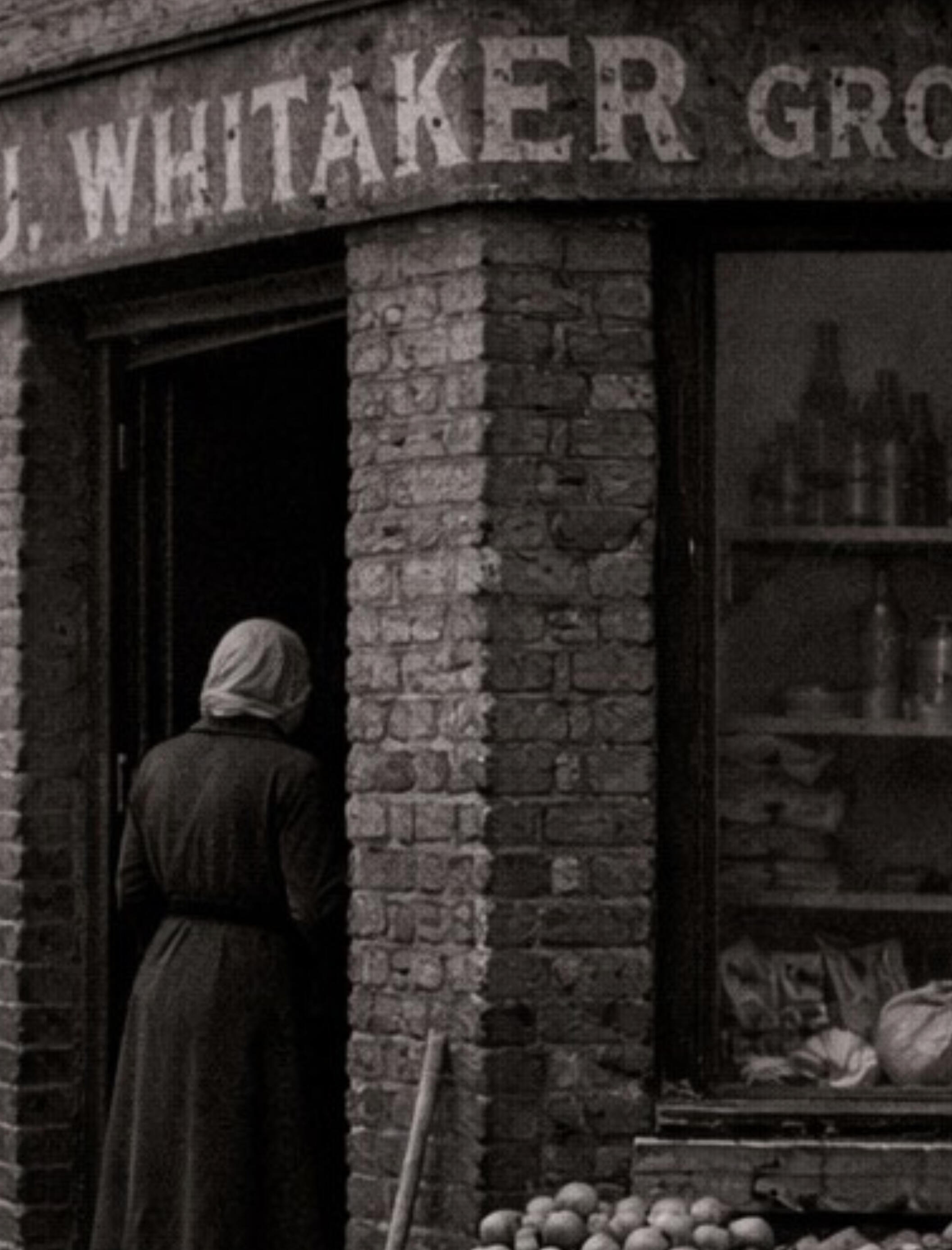
Released in the autumn of 1966, The Corner was the thirtieth production released by Crimea Street Films and among the studio's most distinctive later works.Set around a small corner grocer's serving a terraced district in an unnamed Lancashire town, the film follows the steady flow of customers, neighbours and passing characters whose daily routines bring them to the shop's doorway. Among the regulars is local favourite Eddie "The Gate" Farndon, whose appearances provide some of the production's lighter moments.Rather than building towards dramatic events, The Corner concerns itself with ordinary encounters and quiet conversations. Children arrive with shopping lists, workers call in on their way home and familiar faces drift in and out of the story as the neighbourhood around them begins, almost unnoticed, to change.
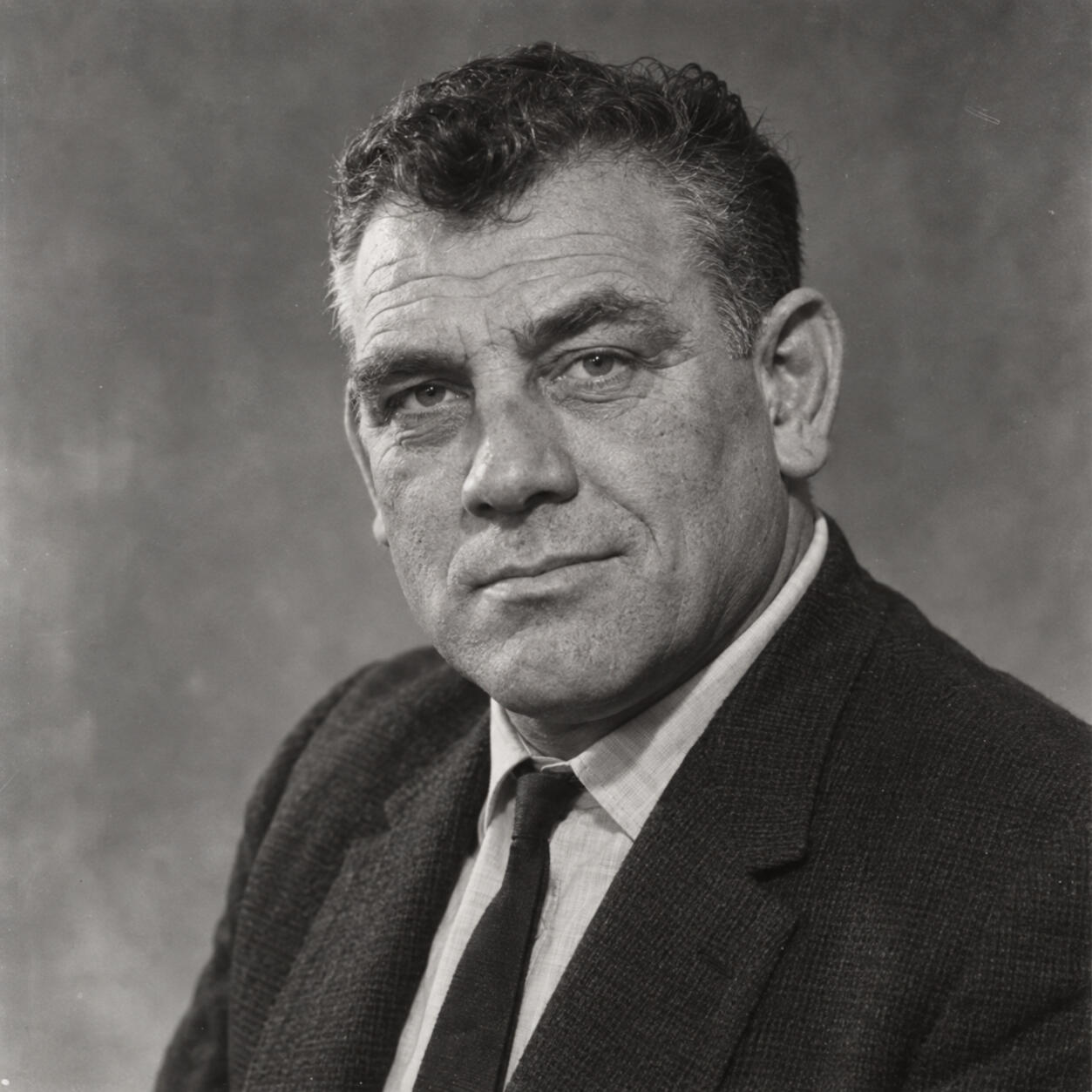
Eddie “The Gate” Farndon (1918–1987)Eddie Farndon was 48 when he appeared in The Corner. Born in Rochdale, he worked as a journeyman boxer before joining a local amateur dramatic society after the war. His broad build, weathered face and dry delivery led to a succession of small theatre and television roles, usually as policemen, foremen, landlords and men carrying things through doorways.In The Corner, Farndon made a brief appearance as a delivery driver bringing crates to J. Whitaker’s grocery. He was on screen for only a few minutes, but his exchanges with the shopkeeper provided some of the film’s lighter moments. Audiences appeared to adopt him immediately, and the character was remembered with an affection entirely out of proportion to the size of the role.Farndon continued working in regional theatre and television throughout the 1970s. He rarely received leading parts, but became a familiar presence in northern productions, particularly when a scene required someone capable of attracting attention without appearing to seek it.Nobody knew why he was called “The Gate”.He retired from acting in 1981 and returned to Rochdale. He died in 1987, peacefully at home while feeding his beloved pigeons.
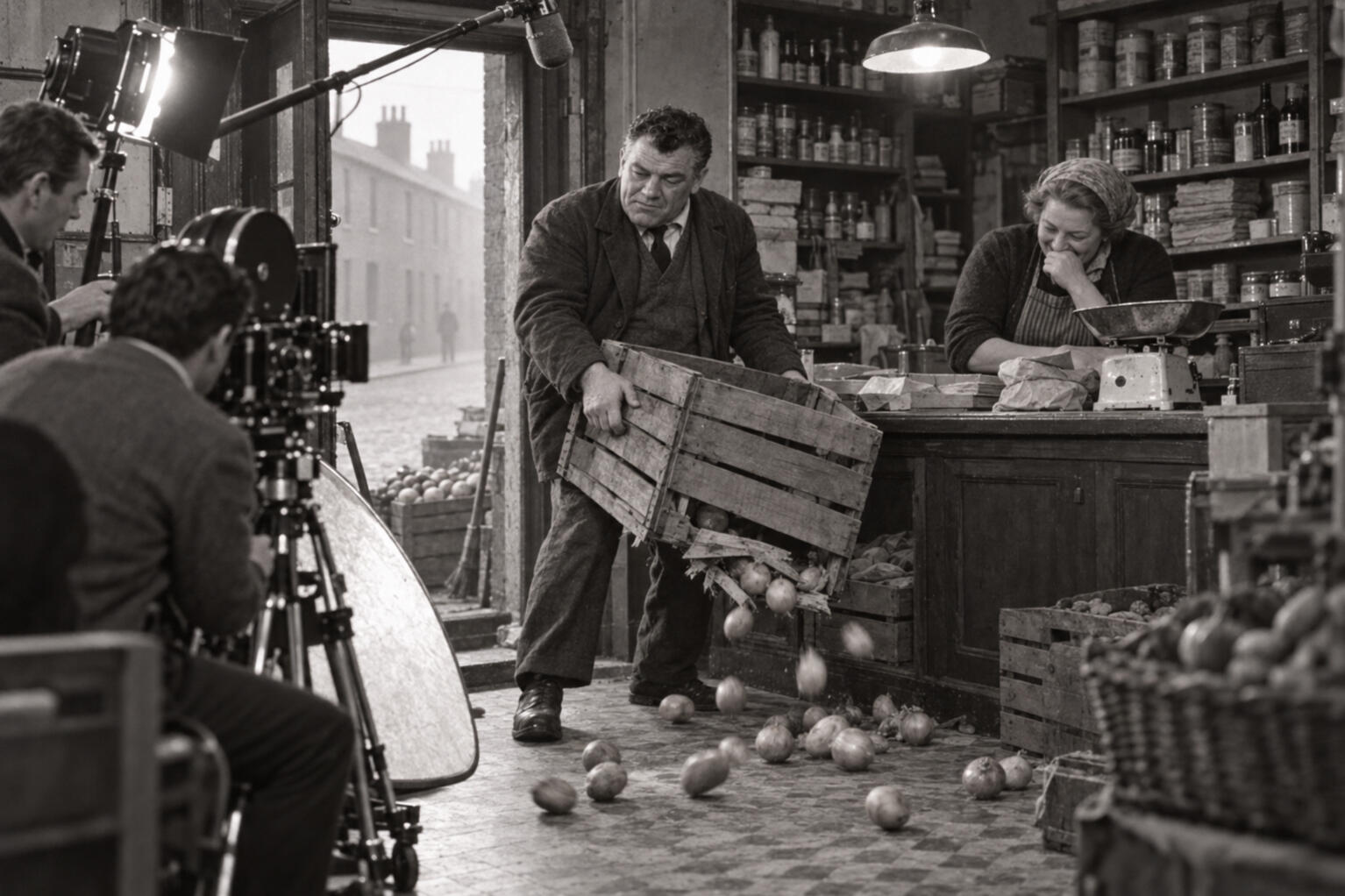
The Corner (Northern Deco)Olive James' interpretation of The Corner focuses on the familiar grocery shop that sits at the heart of the film.The warm light spilling from the doorway contrasts with the quiet street beyond, emphasising the sense of community and routine that runs throughout the production.The work distils the atmosphere of the film itself, finding beauty in the ordinary streets and familiar corners that defined so much of Crimea Street Films' work.
What did the critics think?
Upon release, reviews were mixed.The Manchester Evening Chronicle described the film as:"A modest picture about ordinary lives that quietly accumulates unexpected weight."The Daily Sketch was less enthusiastic:"Another Crimea Street exercise in proving that very little can happen for a very long time."More favourable responses emerged from regional critics, several of whom recognised the film's underlying subject. While ostensibly concerned with a grocer's shop, many interpreted the production as an examination of communities confronting gradual change rather than dramatic decline.One reviewer observed:"The shop sells groceries. The film sells the unsettling feeling that familiar things may not remain familiar for much longer."Commercially, The Corner attracted only limited audiences and received a brief regional release before disappearing almost entirely from circulation. Financial difficulties within Crimea Street Films worsened during the months following completion and the company ceased production shortly afterwards.Today, The Corner is often viewed as an unintended farewell to the world that had occupied the studio throughout its existence. Later critics frequently point to the film's closing image, the grocer's doorway standing open to an empty street, as a fitting final statement from a company whose work consistently found significance in places and people overlooked by everyone else.
From the archive
Among the surviving Crimea Street Films papers is a handwritten note by Alistair Dunmore concerning The Corner. Written during pre-production, it contains only a few lines:"People think it's a film about a shop. It isn't. It's about the people who would notice if the shop wasn't there."The note is undated and was discovered among Dunmore's working papers after his death. Whether the sentiment shaped the finished production or merely reflected an early idea remains uncertain.
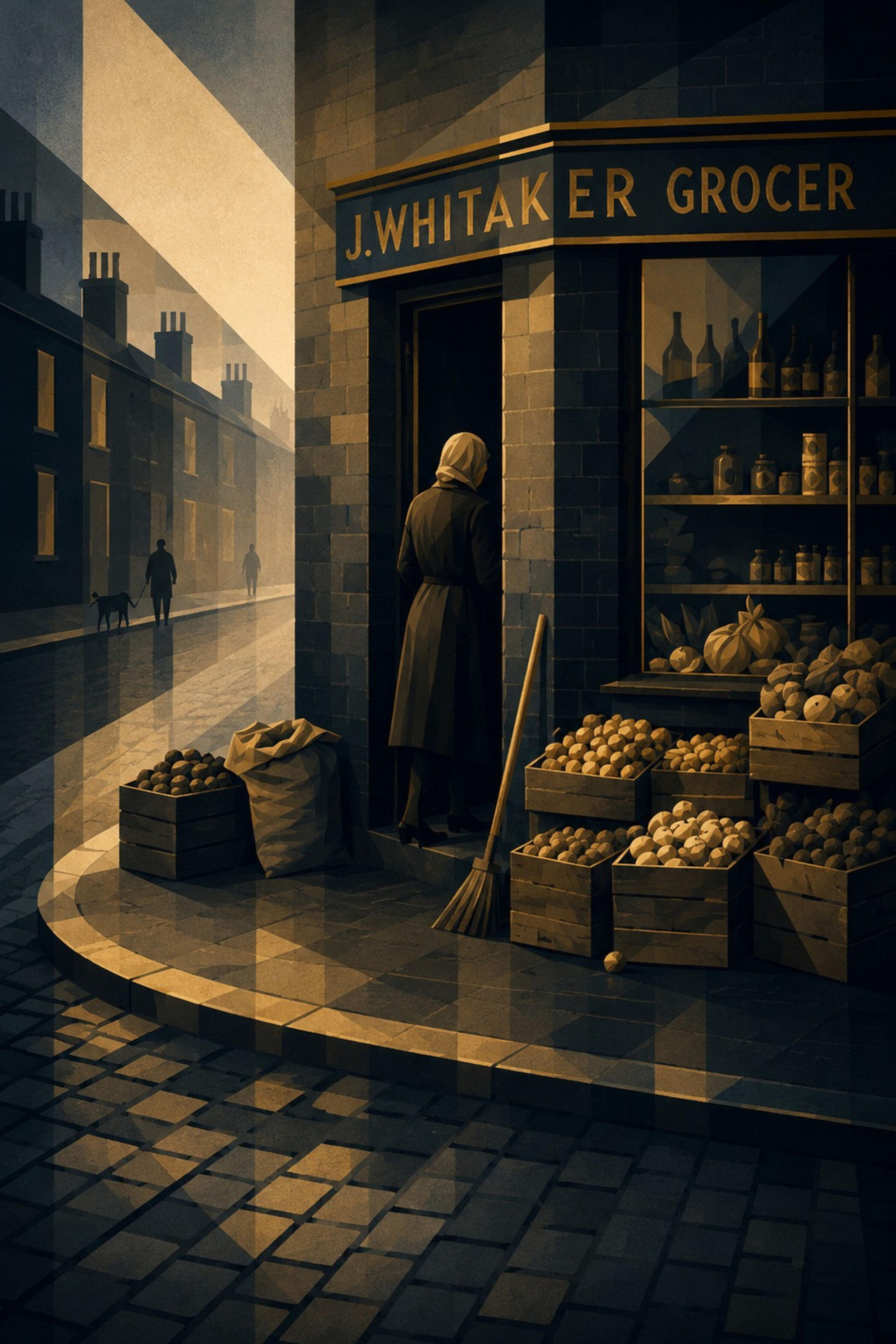
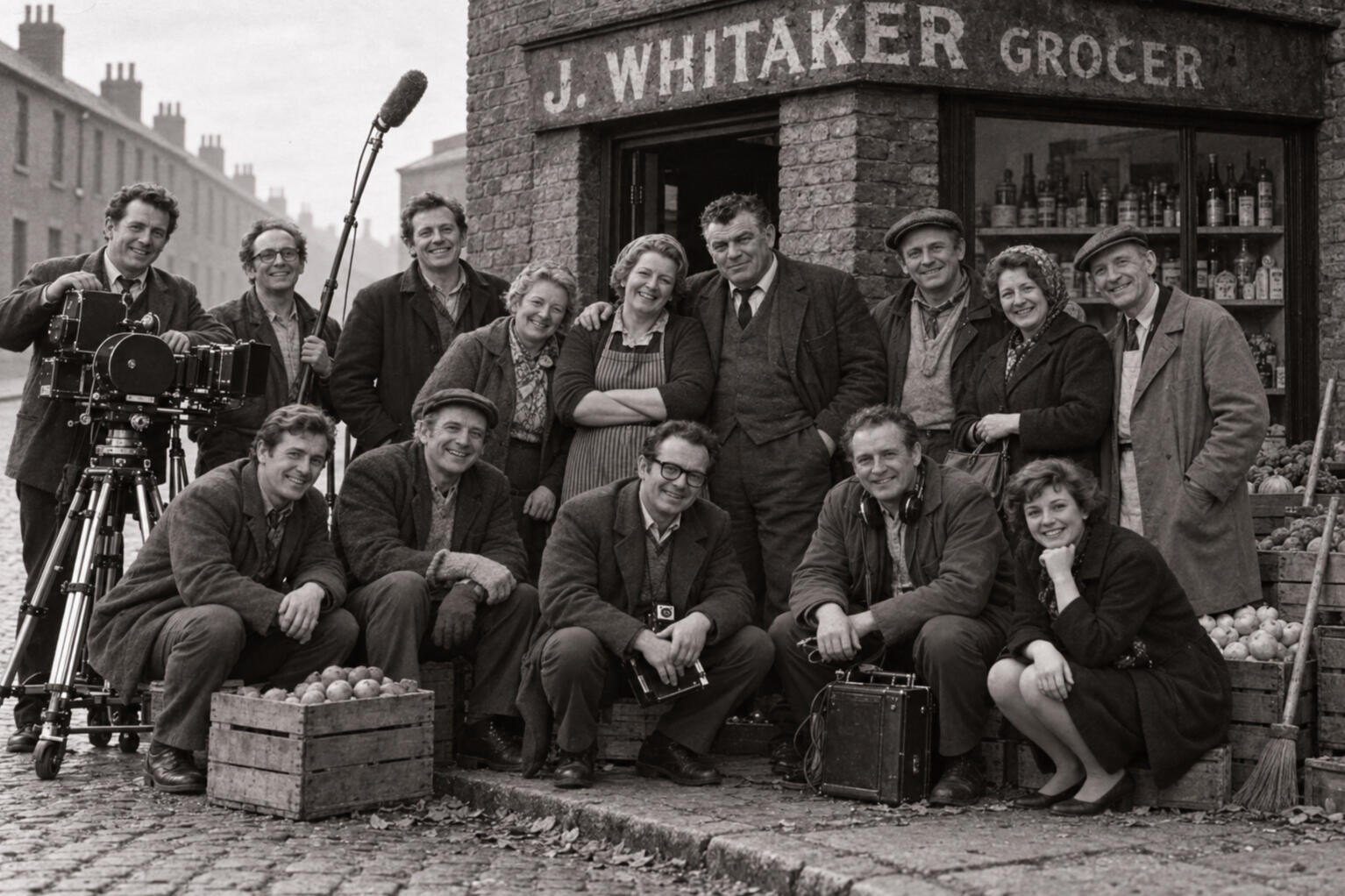
Publicity shot from the archive
The artwork of Reg Baines
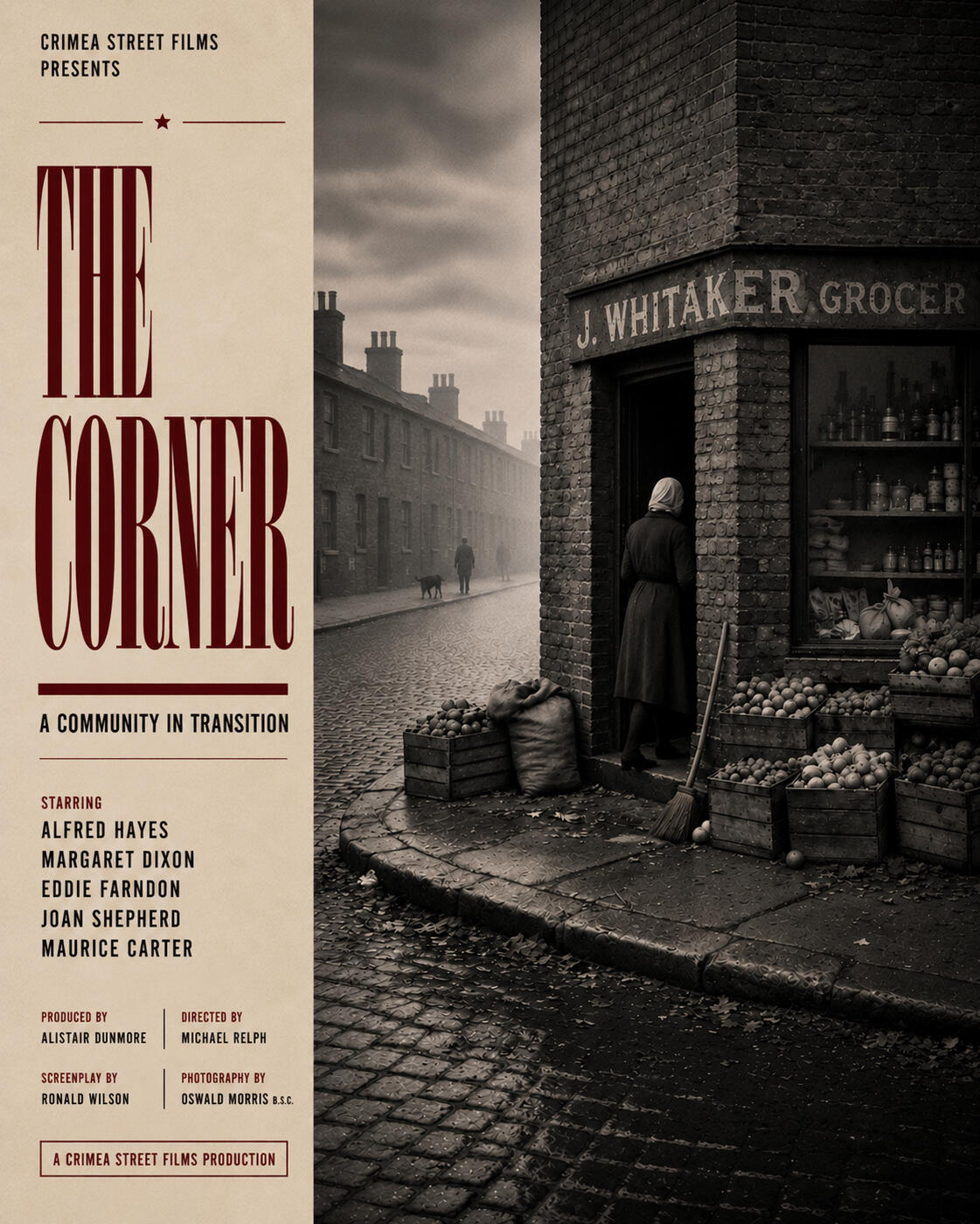
The original posters created by Reg Baines are synonymous with the studio and are very much part of its history.They would have been seen throughout the North of England outside cinemas, on hoardings and in places such as train stations.Most of them were damaged in a fire at the studio in late 1966, but we are delighted to now work with Parbold-based artist, Brian Astley.He has faithfully reproduced each poster to a standard that our Reg would have been proud of and each one is available unframed on 240 gsm art paper as a 16 x 20 inch homage to the films we celebrate.